
Debt Settlement vs. Bankruptcy: What Texans Need to Know in 2025
Introduction
Debt doesn’t just affect your bank account — it impacts your stress, your family, your future. When things feel overwhelming, two of the most common options are debt settlement and bankruptcy. But how do you know which is the right path?
This article will break down the key differences between these two options, specifically for Texans, and help you decide what’s best for your financial future.
What Is Debt Settlement?
Debt settlement is a process where you or a professional negotiates with creditors to pay less than what you owe — often in a lump sum or structured plan. Creditors agree to “settle” the account for a reduced amount rather than pursuing the full balance.
Pros:
Can significantly reduce your total debt
Faster than most bankruptcy timelines
No court involvement
Can be done without damaging assets
Avoids bankruptcy on your public record
Cons:
Credit score may drop during the process
Not all creditors will settle
May owe taxes on forgiven debt
Collection calls may continue until settled
What Is Bankruptcy?
Bankruptcy is a legal process that allows individuals or businesses to eliminate or restructure certain debts under court supervision. In Texas, most individuals file under:
Chapter 7(liquidation): Assets are sold (if applicable) to pay creditors; remaining debts are discharged.
Chapter 13(repayment): You follow a court-approved repayment plan over 3–5 years.
Pros:
Can discharge many debts permanently
Provides legal protection from creditors
Stops lawsuits, garnishments, and repossessions
Cons:
Major damage to credit (remains on your report for 7–10 years)
Public record status may affect housing or employment
Not all debts can be discharged (student loans, tax debt, etc.)
Involves legal fees and court oversight
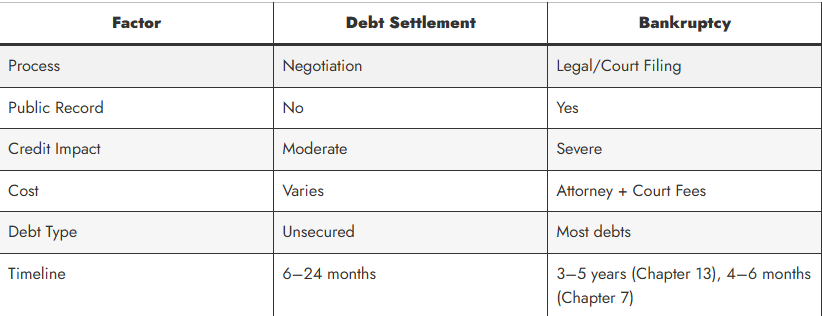
Key Differences: Debt Settlement vs. Bankruptcy
When Is Debt Settlement Better?
You have mostly unsecured debt (like credit cards or medical bills)
You have some income or assets you want to protect
You want to avoid bankruptcy but need major debt relief
You’re willing to commit to a structured settlement plan
When Is Bankruptcy Better?
Your debts are overwhelming and no repayment plan is realistic
You’re facing lawsuits, garnishments, or foreclosure
You need complete legal protection and a fresh start
You’ve exhausted other options and can’t negotiate with creditors
Texas-Specific Considerations
Texas offers some of the strongest asset protection laws in the U.S. during bankruptcy — including generous homestead and vehicle exemptions. That means many Texans can file Chapter 7 without losing their home or car, depending on their situation.
However, Texas debt collection laws also give creditors powerful tools, and ignoring debt can lead to legal action. That’s why taking action early — with or without bankruptcy — is critical.
Final Thoughts
If you’re overwhelmed by debt, you have options — but no one-size-fits-all solution. Debt settlement may be a powerful tool to reduce what you owe without court. Bankruptcy may offer the fresh start you truly need.
The best option depends on your income, debt type, credit score, and long-term goals. That’s why we always start with a free consultation — no pressure, just clear answers.
Credit Relief Counselors proudly helps clients across Houston, Sugar Land, Katy, Pearland, and the greater Texas area explore legal, ethical debt relief solutions tailored to their situation.
