
Is It Smarter to Pay Off Debt or Save Cash in 2025? What to Do in Today’s Economy
In 2025, most Americans — especially here in Texas — are feeling the financial squeeze. Between inflation, higher interest rates, rising rents, and economic uncertainty, many families are asking one critical question:
“Should I focus on paying off debt, or should I save cash instead?”
The truth is, there’s no one-size-fits-all answer. But in this post, we’ll break down how to decide based on your situation, what experts recommend in 2025, and how you can build both short-term security and long-term financial strength.
What’s Changed in 2025?
In recent years, economic conditions have made this decision harder:
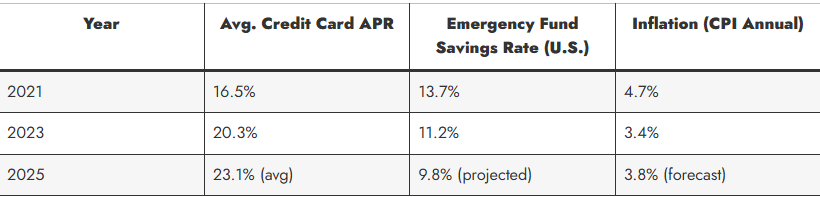
Interest rates are higher, so debt is more expensive.
Savings rates are lower, as households dip into reserves.
Living costs are still rising, particularly in Texas cities like Houston, Dallas, and Austin.
This means the trade-off between paying down debt and saving for emergencies is tighter than ever — and the wrong choice can leave you vulnerable.
Step 1: Know Your Financial Priorities
Start by asking:
Do I have at least $500–$1,000 in emergency cash?
Am I behind on any bills or minimum payments?
Are any of my debts in collections or high interest (20%+)?
Is my income stable, seasonal, or unpredictable?
These answers will help you prioritize.
Rule of Thumb in 2025
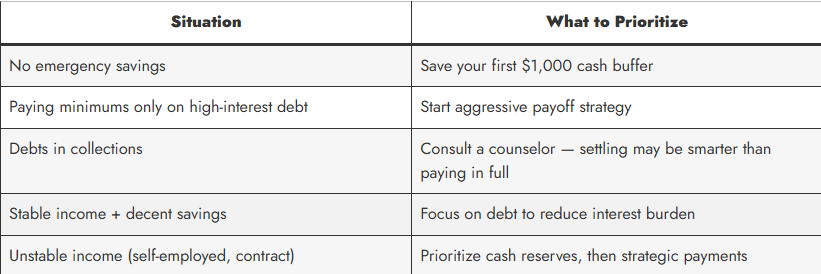
If you don’t have a basic emergency fund, build that first — even while making minimum debt payments.
Once that’s done, shift focus to high-interest debt.
Why? Because one unexpected bill without a cushion — car repair, medical issue, job delay — can push you into more debt, not less. Cash prevents that spiral.
How to Prioritize Your Dollars
Here’s a practical framework:
How to Build a Cash Cushion (Even If You’re Tight on Income)
Round up your bills— if your rent is $965, pretend it’s $1,000 and save the difference.
Sell unused items— garage sales, Facebook Marketplace, Offer Up.
Cut one auto-subscription— Spotify, Netflix, Audible — and move the savings to cash.
Redirect tax refunds or windfalls to a separate savings account.
Use banking apps like Chime or Ally that automatically round up purchases and save them.
Even $10/week builds momentum. And psychology matters — building savings is a confidence booster when your finances feel shaky.
Why High-Interest Debt Needs to Go — But Not at the Expense of Your Safety Net
Paying off a 24% credit card is technically a “guaranteed return” — better than most investments. But if you throw your entire paycheck at debt and then get hit with an emergency, you could wind up deeper in debt.
Instead:
Build a starter emergency fund first.
Then use the “debt avalanche” method— pay off the highest-interest debt first while maintaining minimums on the rest.
Once you clear the highest one, roll that payment into the next — this snowballs progress.
What About Low-Interest Debt (Student Loans, Car Loans)?
If your loan interest is below 6%, you don’t necessarily need to rush to pay it off ahead of schedule. It may be smarter to:
Pay on time to build credit
Save aggressively
Use the difference for higher-interest debt or financial goals
In other words, not all debt is bad— focus on the expensive debt first.
Texas-Specific Note: Medical Debt & Collections
Many Texans face medical debt due to high out-of-pocket costs. Here’s what to know in 2025:
Medical collections under $500 no longer appear on credit reports
You have a 1-year grace period before medical bills go to collections
Negotiating or settling medical debt is often possible — we can help review your options before you pay anything
Final Takeaways
Start with savings if you have none — even a small cushion prevents new debt.
Target high-interest debt next— especially credit cards over 20%.
Avoid draining all your cash to pay down debt — it’s risky without a fallback.
Use structured strategies like the debt avalanche or snowball method.
Talk to a professional if you’re unsure — the wrong move could cost you more later.
You Don’t Have to Choose Alone
At Credit Relief Counselors, we help clients across Houston and Texas build realistic, effective plans for tackling debt and growing savings — no shame, no pressure, just progress.
Call us today for a free consultation, and let’s build your relief plan together.
