
Why Credit Scores Matter More Than Ever in 2025: What Lenders Are Really Looking At Now
In 2025, your credit score is no longer just a number — it’s a financial filter. Whether you’re applying for a mortgage, car loan, apartment, or even a new job, your score can open doors or slam them shut.
What makes this year different? Post-pandemic economic fallout, high interest rates, and tighter lending standards have made lenders far more selective. A score that once got you approved in 2019 might now get you denied or charged double the interest.
In this guide, we’ll break down why credit scores matter more than ever in today’s climate, what lenders are really looking for, and what you can do to get ahead — especially if you live in Houston or anywhere in Texas.
What Changed in 2025?
Let’s start with the big picture:
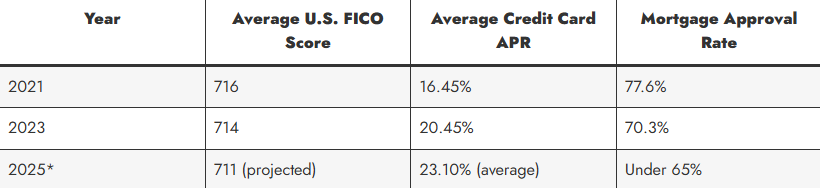
*Data based on Experian, LendingTree, and industry projections.
Key trends in 2025:
Lenders are tightening requirements due to rising delinquencies
Credit score “buffers” are shrinking — meaning a 660 today isn’t what a 660 meant two years ago
Subprime loans (scores below 620) are harder to get and more expensive
Income and debt-to-income ratios now matter even more in underwriting
What Lenders Are Really Looking At in 2025
In addition to your raw score, most lenders now review:
1. Credit Utilization
They want to see credit cards below 30% of your total limit — under 10% is ideal.
2. Payment History Consistency
Even one recent late payment can tank your approval chances. On-time payments matter more now than ever.
3. Types of Credit Used
Having both revolving credit (credit cards) and installment loans (car, student, personal) shows responsible credit behavior.
4. Credit Inquiries
Too many applications in a short window can signal desperation — and lenders notice.
5. Recent Derogatory Marks
Recent collections, charge-offs, or repossessions (even small ones) can override a decent score.
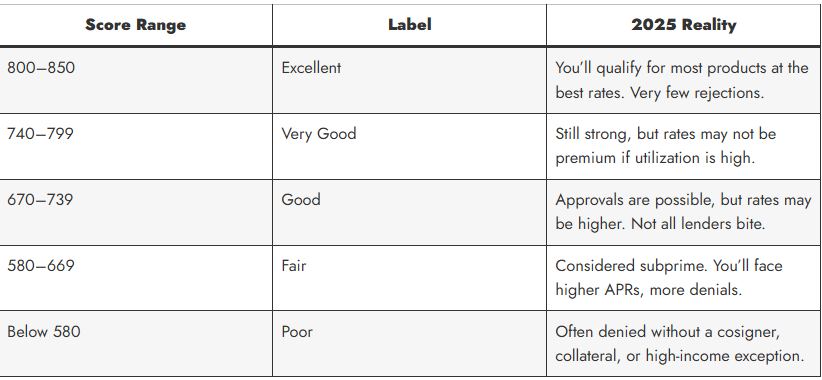
Credit Score Tiers: What They Mean for Borrowers Today
Why Houston & Texas Borrowers Should Pay Extra Attention
Texas cities like Houston, Dallas, and Austin rank high nationally for:
Credit card debt per household
Medical collections
Subprime auto loan delinquencies
Many lenders in Texas use risk-based pricing, which means the lower your score, the higher your rate. A 620 borrower could easily pay double or triple the interest rate of someone with a 750+ score — costing thousands more over time.
What You Can Do Right Now to Stay Ahead
1. Pay at least the minimum on time — always
Even one late payment can undo 6–12 months of good credit behavior.
2. Keep balances below 30% — ideally under 10%
If your credit card limit is $2,000, keep your balance under $600 — under $200 is better.
3. Avoid opening too many new accounts at once
Every hard inquiry counts. Plan applications strategically, not impulsively.
4. Don’t close old accounts
Even unused, older accounts help your credit history and utilization ratio.
5. Dispute any errors on your credit report
One wrong item can drop your score by 50+ points. We can help you review and dispute it properly.
A Note About Buy Now, Pay Later (BNPL) in 2025
With more BNPL platforms reporting to credit bureaus, late payments on tools like Klarna, Affirm, or Afterpay can now impact your credit score. Treat them like any other line of credit — missing a $75 payment could hurt more than you think.
In 2025, credit isn’t just about getting approved — it’s about saving money, reducing stress, and opening up long-term opportunities. With tighter lender standards and high interest rates, a strong credit score gives you leverage in a way that it didn’t even five years ago.
If your credit needs work, don’t wait. The sooner you act, the more options you’ll have. And remember: your credit doesn’t define you — but how you manage it now can shape your future.
Need help building or repairing your credit?
Call Credit Relief Counselors for a free consultation. We proudly serve clients in Houston, Katy, Sugar Land, Pearland, and across Texas.
